other

Blog

  • Amorphous Inductor: The
    Amorphous Inductor: The "Invisible Heart" Behind the Energy Efficiency Revolution
    Dec, 09 2025
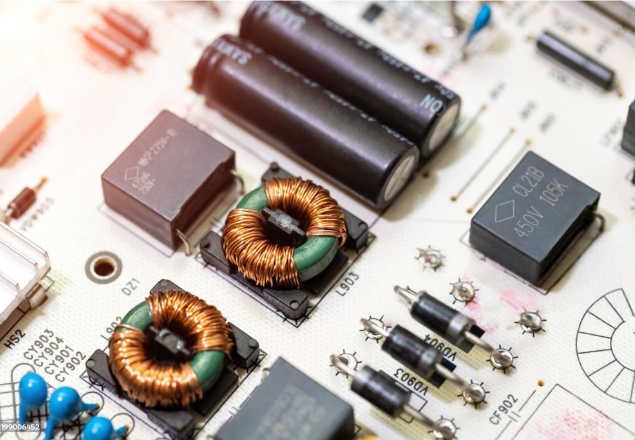
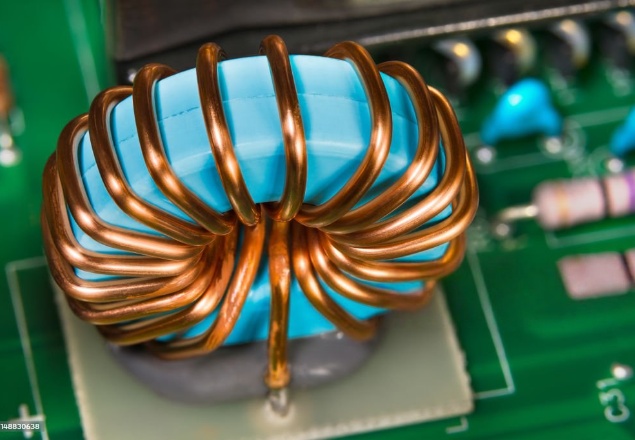
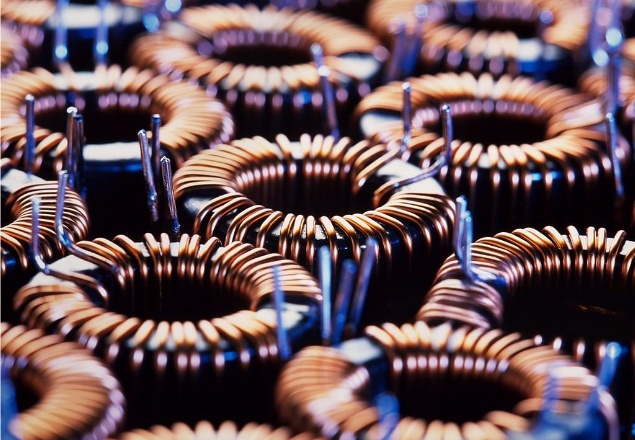
    Within the surging currents of new energy vehicles, amidst the leaping electromagnetic waves of 5G base stations, and during the silent energy conversion in photovoltaic fields, an "invisible heart" beats powerfully, reshaping the efficiency logic of the entire electronic world—this is the amorphous inductor. This mysterious component, with "metallic glass" at its core, is becoming a key force driving the green energy revolution and digital future through its groundbreaking material properties. I. Unveiling "Metallic Glass": Why is the Amorphous Inductor Different?Amorphous alloy is a metal "frozen" into shape by ultra-rapid cooling at millions of degrees per second, its atoms arranged as disorderly as glass. It is precisely this unconventional structure that endows amorphous inductors with four extraordinary characteristics: Superb Magnetic Conductance (Permeability up to 100,000-level): Like paving a "highway" for magnetic fields, it significantly enhances high-frequency filtering and energy conversion efficiency. Extremely Low Loss (Core Loss Reduced by Over 40%): Minimizes energy waste as heat from the source, remaining cool and composed even during high-frequency operation. Remarkable Stability (Operates from -40°C to 125°C): Unfazed by extreme cold or heat, with a service life potentially exceeding three times that of traditional inductors. High Saturation Flux Density (>1.5 T) and Miniaturization: Carries greater energy within a smaller volume, perfectly meeting high-density integration needs. II. Empowering Diverse Industries: From "Green Engine" to "Signal Guardian" 1. The "Efficiency Multiplier" for the New Energy Revolution Electric Vehicles: On-Board Chargers (OBC) equipped with amorphous cores achieve up to 96% efficiency, reducing charging time by 20%; drive motor core loss plummets by 60%, while power density increases by 35%. Dozens of amorphous inductors are needed in each high-end electric vehicle. With China's annual production exceeding 6.88 million units, demand is growing exponentially. Photovoltaics & Wind Power: Attenuates harmonics by over 80 dB in inverters, boosting system efficiency by 2-3%. Its micro-strain sensing capability can provide up to 30 days of early warning for micro-cracks in wind turbine gearboxes, safeguarding clean energy assets. 2. The "Signal Guardian" for High-Frequency Communication 5G Base Stations: Circulators based on amorphous/nanocrystalline cores achieve an insertion loss of only 0.2 dB and isolation up to 45 dB, serving as the unsung hero supporting Massive MIMO antenna performance. Satellite Communication: Controls insertion loss to <0.5 dB in Ka-band equipment, enhancing deep-space signal transmission stability by 50%. 3. The "Precision Energy-Saving Officer" for Smart LivingFrom the precise control of industrial servo drives to the quiet efficiency of smart home power supplies, amorphous inductors enhance performance while propelling devices toward a future that is more compact and energy-efficient. III. Market Landscape: Competition and Future in a Billion-Dollar Blue Ocean     Dimension Status & Trends Market Scale Core component market reached 4.5 billion CNY in 2023 (+18%), projected to exceed 7 billion CNY by 2025 and surpass 10 billion CNY by 2028. Industrial Layout East China (58%): Center for scaled manufacturing; Northeast China (22%): Hub for high-end materials and device R&D. Core Challenges Production equipment for ultra-thin strips (<20μm) is limited; material costs need optimization; market is led by giants like Baowu and CITIC Pacific. Growth Engine New energy vehicle demand is projected to constitute 45% of total demand by 2025, representing the absolute core driving force. IV. Practical Selection Guide: How to Effectively Utilize This "Invisible Heart"? Faced with diverse needs, precise selection is key: Selection by Structure: Toroidal Core: Low magnetic leakage, high strength. The preferred choice for high-current filtering and scenarios with stringent EMC requirements. Rectangular Core: Good heat dissipation, easy winding. Suitable for high-power inductors and transformers. Cut Core: Adjustable air gap. Beneficial for small-batch customization and precise tuning. Three Principles to Avoid Pitfalls: Don't Blindly Worship High Permeability: Be wary of its sensitivity to DC bias; a comprehensive evaluation is necessary. Strictly Assess Environmental Suitability: Especially in extreme environments like automotive and outdoor communications, temperature drift characteristics determine lifespan. Consider Full-Spectrum Harmonics: Selection must cover the full operating frequency spectrum, not just the fundamental frequency. Conclusion: A Small Component, A Vast Future The rise of the amorphous inductor represents a fundamental materials revolution starting from the atomic structure. It is no longer just a component in electronic circuits but a strategic pivot empowering countless industries towards efficient, low-carbon transformation. For the industry, grasping its technological trajectory means securing a performance advantage for next-generation products. For society at large, understanding this "invisible heart" allows for deeper insight into how technology is quietly shaping a more efficient and greener sustainable future.
  • Miniature Current Transformers: The Cornerstone for Sensing in Electrical Systems, The Hidden Engine for Smart Empowerment
    Miniature Current Transformers: The Cornerstone for Sensing in Electrical Systems, The Hidden Engine for Smart Empowerment
    Dec, 18 2025
    In the intricate network of modern electrical systems—from smart meters and solar inverters to industrial robots—there exists a component that, though tiny, plays an indispensable role: the Miniature Current Transformer (Mini-CT). Hidden within countless devices, it serves as the cornerstone for safe, accurate current measurement and system protection. As digitalization and electrification sweep across the globe, understanding the growing importance of this "unsung hero" is becoming increasingly vital. I. Core Definition: What is a Miniature Current Transformer? A miniature current transformer represents the miniaturized and integrated evolution of traditional current transformers. Its core mission is based on the principle of electromagnetic induction: to safely and proportionally convert high-current, high-voltage signals from the primary side into low-current signals on the secondary side, while achieving essential electrical isolation. Unlike bulky industrial-grade counterparts, Mini-CTs are typically no larger than a coin or a fingernail, designed specifically for printed circuit board (PCB) integration or compact spaces. This enables precise current monitoring in devices such as smart meters and IoT sensors. II. Working Principle: The Ingenious Application of Electromagnetic Induction. The operational process follows Faraday's Law and can be simplified into four key steps: Flux Generation: The alternating current being measured (primary side) flows through a conductor (acting as a single-turn coil), generating alternating magnetic flux in a high-efficiency core (e.g., ferrite, nanocrystalline). Signal Induction: The multi-turn secondary winding around the core induces a proportional alternating current. Proportional Transformation: The transformation ratio is strictly determined by the turns ratio (e.g., 1000:1 converts 100A to 0.1A). Signal Output: The secondary current passes through a sampling resistor, converting it into a voltage signal readable by a microprocessor. Safety Warning: During operation, the secondary side must never be open-circuited, as this can generate dangerously high voltages, posing risks to personnel and equipment. III. Key Features: Small Size, High Performance. The Mini-CT is far more than just a "scaled-down" version; it is deeply optimized for modern electronic needs: High Accuracy and Wide Bandwidth: Accuracy can reach ±0.1%, with frequency response covering from 50Hz to tens of kHz, meeting diverse needs from power frequency metering to switch-mode power supply monitoring. Excellent Electrical Isolation: Provides isolation voltages up to several thousand volts, building a robust safety barrier. Low Loss and High Efficiency: Advanced core materials ensure minimal self-power consumption, reducing impact on the measured circuit to the greatest extent. High Cost-Effectiveness and Easy Integration: Suitable for mass production, offering various packages like PCB mount, through-hole, and clip-on styles, greatly simplifying design. IV. Core Applications: Empowering Diverse Industries. Smart Grids and Energy Metering: Acting as the "heart" of smart meters, enabling advanced functions like time-of-use pricing and load monitoring, making them key sensors for grid digitalization. Industrial Automation: Providing real-time phase current feedback in variable frequency drives (VFDs), servo drives, and robots, enabling overload protection and precise control. Renewable Energy: Photovoltaic inverters and wind turbine converters rely on them for accurate DC and AC side current sampling to maximize power generation efficiency and grid synchronization. Consumer Electronics and IoT: Integrated into smart sockets, charging piles, and energy managers, facilitating user-side energy conservation and power usage visualization. Specialized Fields: Providing stable and reliable electrical parameter monitoring in rail transit, data center UPS systems, and high-end medical equipment. V. Selection Guide: Quick Reference for Key Parameters. Selecting the right Mini-CT for your application requires a systematic evaluation of the following parameters:     Consideration Dimension Key Parameters & Explanation Electrical Parameters Rated Current/Turns Ratio: Match the measurement range. Accuracy Class: (0.1, 0.2, 0.5, 1.0). Burden Resistance: Must not exceed the rated value. Frequency & Safety Frequency Range: Must cover the operating frequency (power frequency/high frequency). Isolation Voltage: Must be higher than the system's maximum voltage. Mechanical & Environmental Mounting Style: PCB, through-hole, clip-on. Operating Temperature/Humidity: Suitable for the application environment. VI. Future Trends: Moving Towards Smarter, More Integrated Solutions. The technological forefront is reshaping the future form of Mini-CTs: Material Innovation: New materials like nanocrystalline alloys are further reducing size and losses while improving accuracy and bandwidth. Intelligent Integration: "Smart sensor" type CTs with built-in self-diagnostics and digital outputs (e.g., I²C) are emerging, simplifying system design. Technology Convergence: Coreless technologies like optical current sensing are entering high-end applications, offering near-ideal isolation and interference immunity. Market Drivers: Emerging fields such as electric vehicle fast charging, energy storage systems, and smart buildings are continuously creating new growth demands. Conclusion The miniature current transformer, this precise component hidden deep within circuits, is silently supporting society's electrification and intelligentization with its safety, accuracy, and efficiency. For engineers, decision-makers, and the entire industry, deeply understanding and effectively utilizing this key component is undoubtedly a crucial step in building more reliable, efficient, and intelligent power systems. As technology evolves, its role will shift from "silent measurement" to "active sensing," unlocking even greater value in the future electrical ecosystem.
  • Amorphous Core with Notched Gap (Amorphous Ring-Cut Magnetic Core): 2026 Technology Landscape and Selection Guide
    Amorphous Core with Notched Gap (Amorphous Ring-Cut Magnetic Core): 2026 Technology Landscape and Selection Guide
    Jan, 04 2026
    In the era of high-frequency and high-efficiency power electronics, the performance of magnetic components directly determines system efficacy. The Amorphous Core with Notched Gap, as a breakthrough technology, is driving transformation in fields such as new energy, 5G communications, and high-end industrial power supplies. This guide aims to systematically analyze the core principles, performance advantages, application scenarios, and selection logic of this technology, empowering engineers, designers, and procurement specialists to precisely grasp its application potential. I. Amorphous Core with Notched Gap: Technical PrinciplesTo understand its excellence, an analysis from three dimensions is essential:"Amorphous" Material: Produced via rapid solidification (cooling rate > 10⁶ K/s), forming an amorphous alloy structure with disordered atomic arrangement. This structure eliminates grain boundaries and magnetic domain pinning sites, thus providing the fundamental characteristics of extremely low coercivity and high permeability. "Toroidal" Structure: The closed-loop toroidal path provides optimal magnetic flux confinement, significantly reducing magnetic leakage, ensuring uniform magnetic field distribution, and enhancing energy transfer efficiency. "Notched Gap" Design: A precisely machined specific notch or gap on the magnetic toroid. This critical design:Segments eddy current paths, effectively suppressing high-frequency eddy current losses.Relieves internal stress, enhancing thermal stability and mechanical reliability.Forms a distributed micro air gap, optimizing magnetic performance and heat dissipation.The combination of these three aspects makes it an ideal magnetic solution for addressing the challenges of high frequency and high power density. II. Core Advantages: Why Choose Amorphous Cores with Notched Gap?Compared to traditional silicon steel, ferrites, and standard amorphous cores, its advantages are significant:Ultra-Low High-Frequency Losses: The notch physically interrupts large eddy currents. In frequency bands above 20kHz, eddy current losses can be reduced by 30%-50% compared to standard amorphous cores. For instance, under conditions of 100kHz and 0.5T, its typical total core loss can be as low as 250-280 kW/m³, directly improving system efficiency. Excellent Thermal Stability and Heat Dissipation: The notch releases internal stress, combined with the controlled amorphous/nanocrystalline structure, resulting in minimal magnetic performance degradation (e.g., saturation flux density decay of only ~1.5%) after long-term operation at high temperatures like 150°C (e.g., 1000 hours). Simultaneously, the additional heat dissipation surface formed by the notch can reduce core temperature rise by 15-25°C. High Permeability and Uniform Flux: High initial permeability (µi ≈ 5,000 – 6,000), coupled with optimized toroidal and notch design, results in extremely uniform magnetic flux distribution. This allows the core to operate at higher flux densities (increased by 15-20%), facilitating device miniaturization and higher power density. Superior EMC Performance: The distributed air gap effectively suppresses magnetic leakage, potentially reducing radiated EMI by 5-8dB and conducted EMI by 3-6dB. Additionally, the notch disperses magnetostrictive vibrations, significantly reducing audible noise, meeting the demands of scenarios with stringent quietness requirements like consumer electronics and data centers. High Customizability: Notch parameters (quantity, depth, distribution pattern) can be flexibly adjusted based on specific application requirements such as frequency (kHz to MHz), power level (kW to MW), and performance focus (e.g., loss, inductance, cost), achieving an optimal design balance. III. Key Application ScenariosIts performance advantages are fully utilized in the following fields:High-Frequency Power Converters: Such as LLC resonant converters, phase-shifted full-bridge power supplies, used in server power supplies, communication base station power supplies, etc., to improve efficiency and power density. New Energy Systems: High-frequency boost inductors in photovoltaic inverters, filtering and energy storage inductors in Power Conversion Systems (PCS) for energy storage, wind power converters. Industrial Power Supplies & Motor Drives: Inductors and transformers in medium-to-high power switch-mode power supplies, UPS, variable frequency drives (VFDs), and servo drives. Communications & Data Centers: 5G RF power supplies, Power over Ethernet (PoE) modules, 48V Bus Converters (BCM) in data centers. Specialty Power Supplies & Medical Equipment: Power supplies for aviation, medical imaging equipment, etc., which have extremely high requirements for efficiency, temperature rise, and reliability. IV. Key Considerations for SelectionWhen selecting an Amorphous Core with Notched Gap, a systematic evaluation is recommended: Operating Frequency & Losses: Define the system's operating frequency band and compare the specific core loss (Pcv) curves of target cores within that band. Power & Flux Density: Calculate the required flux density (ΔB) based on power level and topology, ensuring it remains below the core's saturation flux density (Bs) with sufficient margin. Thermal Management Requirements: Assess system cooling conditions and select cores considering their temperature rise data and heat dissipation characteristics. Size & Shape Constraints: Determine the core's outer diameter, inner diameter, height, and potential customized notch layout based on installation space. Cost & Supply Chain: While meeting performance requirements, comprehensively consider initial cost, lifecycle cost savings from energy efficiency, as well as supplier stability and technical support capability. Future OutlookAs power electronics evolve towards higher frequency, greater efficiency, and higher integration, Amorphous Cores with Notched Gap, leveraging their combined material and structural advantages, will continue to expand application boundaries. Coupled with advanced packaging technologies and intelligent design tools, they will become a key cornerstone in building the next generation of green, high-density power systems.

leave a message

leave a message
If you are interested in our products and want to know more details,please leave a message here,we will reply you as soon as we can.
submit

Home

Products

contact

Enter product details (such as color, size, materials etc.) and other specific requirements to receive an accurate quote.
leave a message
If you are interested in our products and want to know more details,please leave a message here,we will reply you as soon as we can.
Submit